
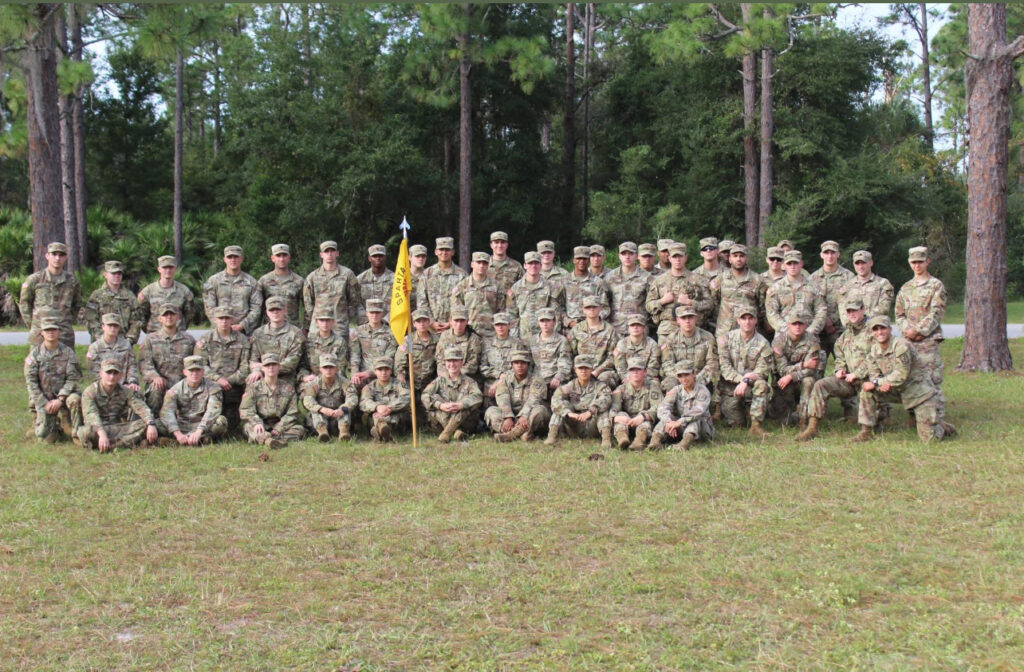
Army ROTC has been the most demanding commitment of my college experience, and without question, the one that has shaped me the most.
From the beginning, ROTC introduced a level of structure, accountability, and expectation that went far beyond the classroom. Time management stopped being a concept and became a requirement. Balancing academics, work, physical training, and leadership responsibilities forced me to develop discipline quickly. There was no option to simply figure it out later. People depended on me to show up prepared.
My experience began with Basic Camp, which laid the foundation. It was an introduction to military standards, teamwork, and operating under stress. The environment was unfamiliar and uncomfortable by design, and that was the point. It taught me how to adapt, take feedback, and perform in situations where clarity is limited and pressure is constant.
Advanced CST presented a completely different challenge. It served as the final hurdle to commissioning and tested physical endurance, mental resilience, and leadership ability at the same time. Leading while exhausted, making decisions with incomplete information, and being evaluated continuously forced me to confront my weaknesses directly. Advanced CST reinforced that leadership is not about having all the answers. It is about remaining composed, decisive, and accountable when conditions are far from ideal.
One of the most impactful parts of my ROTC experience was my time at AFIT, where I was able to blend military leadership development with technical exposure in cybersecurity-focused environments. That experience reinforced why I pursued the Cyber branch in the first place. Cyber operations demand more than technical skill. They require discipline, trust, and a strong ethical foundation. Operating in environments where security decisions can have serious consequences underscored the responsibility that comes with technical authority.
Branching Cyber into the Vermont Army National Guard was a defining moment in my career path. It represented the alignment of my academic focus, professional experience, and long-term goals. Cyber was not simply the most logical branch for me. It was the one that best matched my interests in technology, problem-solving, and protecting critical systems.
ROTC has also taught me lessons that extend far beyond the military. I have learned how to lead peers, accept criticism, and continuously improve. I have learned that preparation matters, details matter, and trust is earned through consistency and competence. Most importantly, I have learned that leadership is not about rank or authority. It is about responsibility, service, and setting the standard.
As I move closer to commissioning, I carry forward the lessons learned through long training days, challenging evaluations, and moments of self-doubt. ROTC did not just prepare me to serve as an officer. It shaped how I approach leadership, pressure, and responsibility in every aspect of my life.